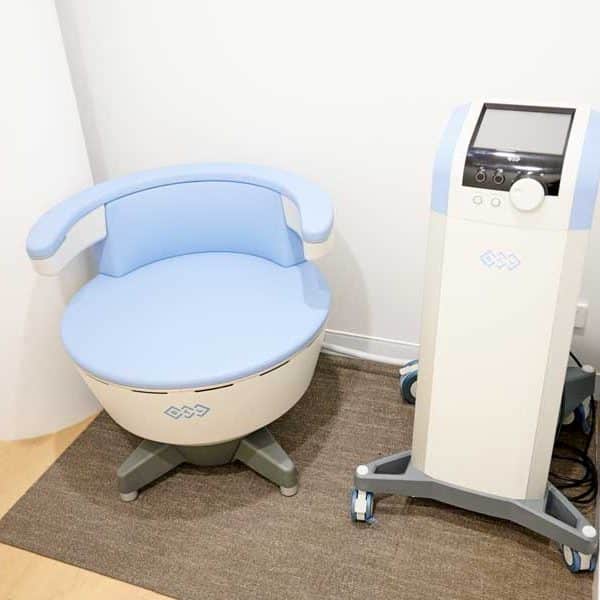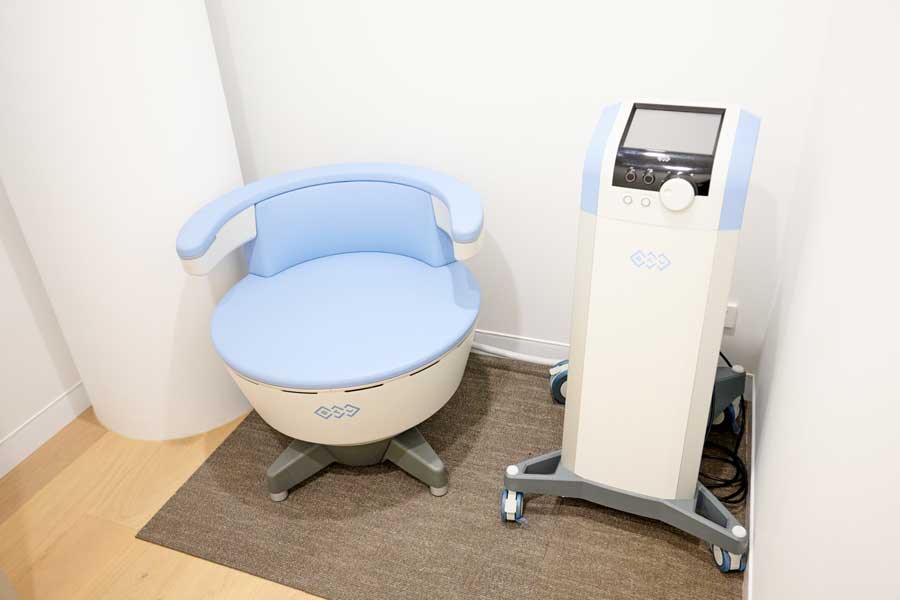
Introducing BTL Emsella at Sydney Pelvic Clinic, a revolutionary breakthrough treatment for stress urinary incontinence, urge incontinence and sexual dysfunction for both women and men. Utilising high-intensity focused electromagnetic energy (HIFEM) to provide those suffering from incontinence and sexual dysfunction with a non-invasive and pain free option.
Quick Links
Emsella Benefits

Emsella is a non-invasive solution for:
Stress urinary incontinence
Urge incontinence
Enhanced sexual response
Weak pelvic floor muscles
Poor bladder control
Top 3 Reasons to Choose Emsella:
Non Invasive
Remain Fully Clothed
Rapidly connect and strengthen your pelvic floor muscle
Start improving pelvic floor strength with your first Emsella session. Try it today!
Book a Consultation

Simply enter your details below, and we will be in touch with you to discuss your booking or enquiry:
Frequently Asked Questions
Am I a candidate?
Emsella is a great option for women and men who desire a solution for urinary incontinence, enhanced sexual function and improvement in their quality of life.

What is the treatment time?
A typical treatment takes 28 minutes and you will need about 6 sessions, scheduled twice a week.
What does it feel like?
You will experience tingling and pelvic floor muscle contractions during the procedure. You may resume daily activities immediately after the treatment.

How fast will I see results?
You may observe improvement after a single session. The results will typically continue to improve over the next few weeks.
Stress urinary incontinence is experienced by up to 40% of females
Stress Urinary Incontinence
Stress urinary incontinence is the involuntary loss of urine as result of increased intra-abdominal pressure due to effort or exertion (such as sneezing/coughing) and it is thought that up to 40% of females experience this (Capobianco et al 2018).
SUI is associated with weakness in the pelvic floor muscles, impeding their ability to fully close the urethra under periods of increased pressure.
It is widely understood that pelvic floor muscle training is the first port-of call for this population and has been shown to cure/greatly improve symptoms in women (Dumoulin et al 2018).
Depending on a number of factors, improvements can take up to 8-12 weeks. The Emsella Chair boosts the performance and activity of the pelvic floor muscles alongside your individualised training program to help you achieve results faster.
The Emsella Chair provides High-intensity Focused Electromagnetic technology (HIFEM) to directly treat incontinence and has been shown to not only increase pelvic floor muscle strength, but also develop a deeper connection and awareness of this area (Samuels et al 2019, Alinsod et al 2018).
Urge urinary incontinence is present in up to 30% of women
Urge Urinary Incontinence
Urge urinary incontinence is the involuntary leakage of urine accompanied by a sense of urinary urgency. The contractions may be caused by bladder irritation/overactivity or loss of neurologic control. It is believed to be present in up to 30% of women (Tran & Puckett, 2020).
As with any form of incontinence, weak pelvic floor muscles are often related to your symptoms. With urge urinary incontinence, it is difficult for the muscles to hold on as long!
The Emsella Chair is a non-invasive way of targeting the pelvic floor muscles. It provides contractions which are stronger than what you can achieve with pelvic floor muscle training alone, reducing the time it takes to see results.
As always, it is important to get a thorough pelvic floor examination with a trained pelvic health physiotherapist first to determine the exact cause of YOUR incontinence, and determine suitability for the Emsella Chair experience!
Urinary incontinence is experienced by up to 80% of men post-prostatectomy
Post Prostatectomy
Radical prostatectomy is the gold standard treatment for prostate cancer in Australia. However, it has been shown that up to 80% of men experience urinary incontinence post-operatively which impacts on their quality of life (Hodges et al 2019)
Here at Sydney Pelvic Clinic, we work closely with men pre and post-prostatectomy as pelvic physiotherapy has been shown to help restore continence (Milios et al 2019). The mainstay of treatment is an individualised pelvic floor muscle training program.
The Emsella Chair has been shown to not only increase the strength in the pelvic floor muscles, but also the mind-body connection, increasing outcomes and accuracy with a home training program (Alinsod et al 2018)
If you think this could help you or your loved one, speak to one of our pelvic health physiotherapists today. It’s never too late to start!
Emsella has been shown to aid the treatment of erectile dysfunction in males
Erectile Dysfunction
Erectile dysfunction is common amongst men and a source of embarrassment. Here at Sydney Pelvic Clinic we understand the impact this has on a man’s life and approach treatment in a sensitive but effective manner.
Male pelvic floor dysfunction has been associated with erectile, ejaculation and orgasm dysfunction (Cohen et al 2015). As the superficial layer provides rigidity during erection, a weakness in these muscles can be associated with erectile dysfunction. Pelvic floor muscle training has been shown to increase penile rigidity and penile hardness in some men with erectile dysfunction (Cohen et al 2015).
The Emsella Chair has been shown to boost the activity of the pelvic floor muscles in ways which cannot be achieved through isolated pelvic floor muscle contractions alone. It has been shown to aid the treatment of erectile dysfunction in males.
It is important to note that erectile dysfunction may also be caused by an increase in the tone of the pelvic floor muscles, in which case the Emsella Chair may not be an appropriate treatment modality.
If erectile dysfunction is a concern for you, book in to see one of our pelvic health physiotherapists today to determine the root cause and start your individualised road to recovery.
Contact Our Team
Contact us: 02 9387 4444 | reception@sydneypelvicclinic.com.au