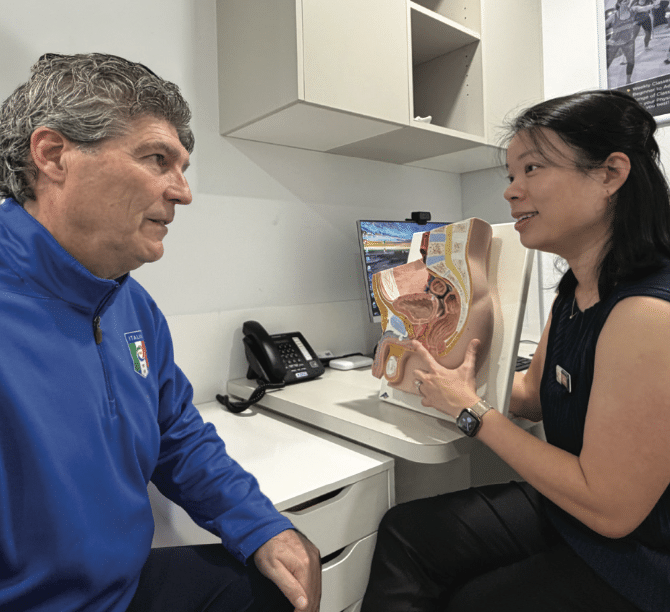
Prostatectomy Prepare, Recover, Rebuild
Pre and postoperative pelvic physiotherapy for prostatectomy patients
Our expert-led physiotherapy pathway supports your journey before and after prostatectomy, focusing on reducing the severity of post-surgical urinary incontinence and expediting recovery time.
6 Physiotherapy Sessions:
- 2 Pre-operative (Prepare)
- 2 Post-operative (Recover)
- 2 Rebuild sessions (Rebuild)
- 5 x small group exercise rehabilitation classes
Individualised assessments and personalised exercise plans throughout each stage.
Stage 1: PREPARE
Preparing with preoperative pelvic floor physiotherapy, gives you the best starting point for recovery. Preoperative sessions focus on tailored pelvic floor muscle exercises, which can significantly improve your return to urinary control after surgery. It is recommended to have 2 physiotherapy appointments before surgery.
When
- Initial consultation approximately 1 month before surgery
- Follow up 1-2 weeks before surgery
What we focus on
- Understanding your pelvic floor muscles and how they support bladder control
- Learning how to correctly activate your pelvic floor, assessed using real-time transperineal ultrasound
- Optimising bladder and bowel habits
- Practicing breathing and pressure management
- Building awareness of the pelvic floor during everyday movements (lifting, coughing, getting out of bed)
What you’ll gain
- Confidence that you’re doing pelvic floor exercises correctly before surgery with clear visual feedback
- A personalised exercise plan to continue leading into your procedure
- A clear understanding of what to expect post-operatively
Stage 2: RECOVER
After surgery, your body needs time to heal—but early, gentle rehabilitation is key to regaining bladder control, supporting bowel function and preventing compensations.
When:
- 7-10 days after catheter removal
- 4 weeks post-opertively (unless otherwise specified by your physiotherapist)
What we focus on
- Reintroducing pelvic floor muscle activation using transperineal ultrasound
- Managing urinary leakage and normalising expectations
- Bladder advice and fluid management
- Supporting bowel health and preventing constipation (a key factor in reducing pelvic floor strain)
- Breathing strategies to reduce unnecessary strain
- Advice on walking, daily activities, and pacing your recovery
What you’ll gain
- Ongoing feedback to ensure you are progressing towards your goals
- Strategies to manage leakage in the early weeks
- Confidence moving safely in daily life
- A structured plan to progress at the right pace
Stage 3: REBUILD
Once healing is underway, the focus shifts to rebuilding strength, endurance, and control—so you can return to exercise, work, and daily activities without fear of leakage. Alongside your medical team, we can also help support erectile function. This may include guidance on penile rehabilitation and further pelvic floor muscle assessment.
What we focus on
- Progressing pelvic floor strength, endurance, and timing
- Scar tissue assessment and mobilisation
- Monitoring erectile function and penile rehabilitation
- Integrating pelvic floor and abdominal co-activation into functional movement
What’s next
At this stage we recommend attending weekly small group exercise classes with your physiotherapist. You will focus on tailored exercises and learn to co-activate your pelvic floor while controlling your breath and movement. This skill teaches you to effectively manage intra-abdominal pressure, a key aspect to reducing incontinence in daily life.
- Transition to our supervised exercise rehabilitation sessions, where your exercises are tailored to your goals (e.g. golf, running, strength training)
- Graded return to gym, lifting, and higher-level activities
What you’ll gain
- Improved bladder control with movement and exercise
- Understanding the pelvic floor muscles role in erectile function
- Confidence returning to the activities you enjoy
- Long-term strategies to maintain: continence, physical strength and erectile health
Our Approach
This program goes beyond basic pelvic floor exercises by looking at the whole person and using movement-based approach. We use real-time ultrasound technology, to help you see and understand how your pelvic floor muscles, breathing and abdominal muscles work together—so you can confidently apply this to everyday movement and exercise. You will be supported through penile rehabilitation and learn to improve your bladder and bowel habits that are essential for long-term continence and recovery.
Medicare and Private Health Insurance Funding for Physiotherapy
Medicare Funding (Chronic Disease Management)
Medicare may provide a rebate for physiotherapy services relating to prostate cancer, as this condition requires ongoing care and management. To be eligible, your GP must determine that you meet the criteria for a Chronic Disease Management (CDM) plan and provide a referral for allied health services. Eligible patients can access up to five Medicare-subsidised allied health consultations per calendar year.
Medicare rebates cover only part of the consultation fee, and an out-of-pocket gap payment will apply. A valid referral from your GP is required before your appointment to claim Medicare benefits.
Private Health Insurance Funding
Many private health insurance policies include physiotherapy under Extras Cover. If your policy includes physiotherapy benefits, you may be able to claim a portion of your consultation and exercise rehabilitation fees back from your health fund. The amount you can claim depends on your level of cover, annual limits, and individual fund benefits.
Our clinics offer on-the-spot claiming through TYRO, allowing eligible patients to process their private health insurance rebate immediately following their appointment.