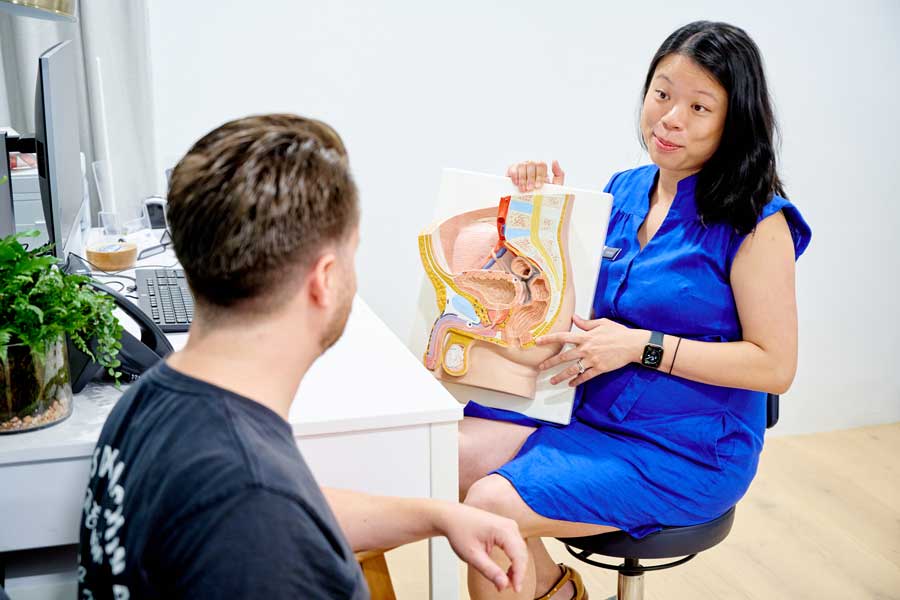
Urinary leakage, urgency, pelvic heaviness and reduced pelvic floor strength are extremely common, particularly following pregnancy, during menopause, or with ageing and exercise participation. Despite this, many people still feel unsure about what is “normal”, what can improve, and which treatment options are effective.
One treatment that has gained increasing attention in recent years is Emsella, a non-invasive treatment designed to stimulate the pelvic floor muscles using high-intensity focused electromagnetic technology.
While Emsella can be a very useful treatment tool, pelvic floor dysfunction is not always simple and straightforward. At Sydney Pelvic Clinic, we strongly believe the best outcomes occur when treatment is tailored to the individual and based on the underlying drivers of symptoms.
Not All Pelvic Floor Symptoms Are Caused by Weakness
The pelvic floor is a group of muscles that sits at the base of the pelvis and plays an important role in bladder and bowel control, pelvic organ support, pressure management and sexual function.
When these muscles are not functioning optimally, symptoms such as urinary incontinence, urgency, pelvic heaviness or reduced confidence with exercise may develop. However, these symptoms are not always caused by weakness alone.
Some individuals experience genuine pelvic floor weakness, reduced endurance or poor muscle coordination. Others may experience symptoms more related to pelvic floor tension, bowel dysfunction, breathing mechanics, exercise loading, nervous system sensitisation or poor bladder habits.
Understanding the underlying cause of symptoms is essential to selecting the most appropriate treatment approach.
What Is Emsella?
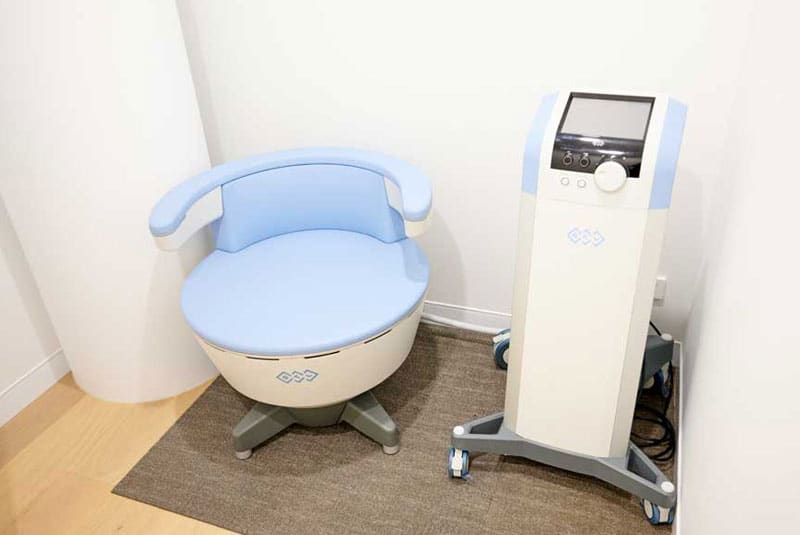
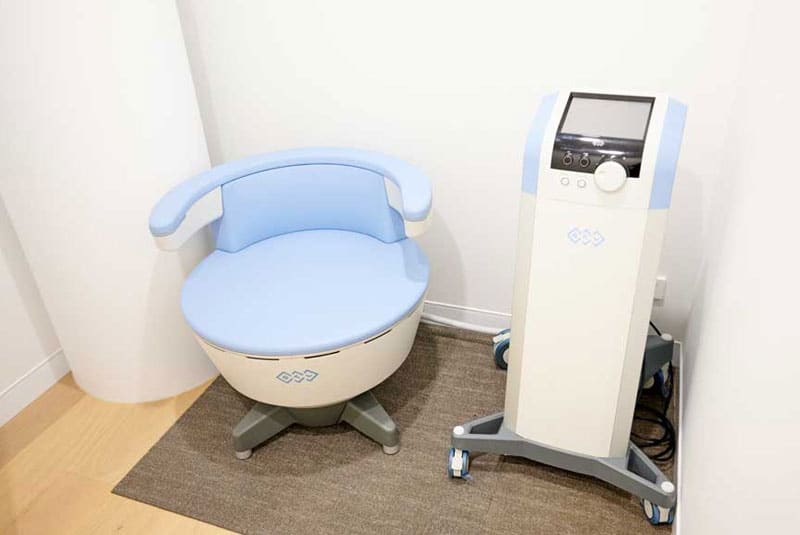
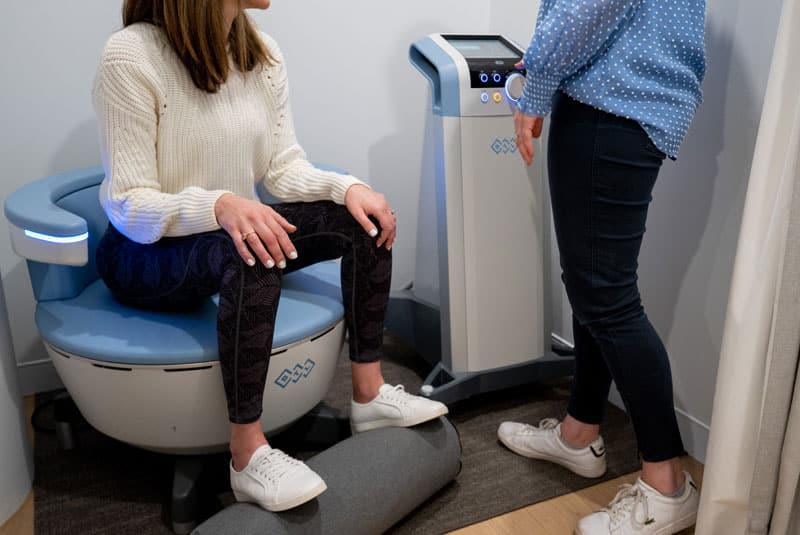
Emsella is an electromagnetic chair designed to stimulate the pelvic floor muscles and nerves. During treatment, patients remain fully clothed while seated comfortably on the chair while the stimulation produces thousands of pelvic floor contractions during a single 28-minute session.
These contractions are significantly more repetitive and more intense than what most individuals can achieve voluntarily on their own. For some patients, this may help improve pelvic floor awareness, muscle recruitment and strength, particularly when weakness or deconditioning are contributing to symptoms.
Many people are surprised to learn that pelvic floor exercises are not always easy. While pelvic floor muscle training is considered first-line management for many pelvic floor conditions, a large proportion of individuals struggle to correctly activate their pelvic floor muscles independently. Others find it difficult to remain consistent with exercises while balancing work, parenting, exercise and the general demands of everyday life. Emsella can help to boost your pelvic floor function, to help you achieve your exercises independently.
Who Is Emsella Right For?
Emsella may be particularly beneficial for individuals experiencing urinary incontinence associated with coughing, sneezing, lifting or exercise, commonly referred to as stress urinary incontinence. It may also assist some individuals experiencing urinary urgency or frequency, reduced sexual sensation or reduced pelvic floor awareness.
We often find Emsella most helpful for patients who struggle to effectively activate their pelvic floor muscles, demonstrate pelvic floor deconditioning, or lack confidence returning to movement and exercise. This can include postpartum patients, peri-menopausal women, ageing populations or individuals returning to exercise after long periods of symptom limitation.
At Sydney Pelvic Clinic, we assess pelvic floor coordination, bladder and bowel habits, breathing patterns, pressure management strategies, exercise participation and broader lifestyle factors that may be contributing to symptoms. Understanding the underlying cause of symptoms helps determine whether Emsella is likely to be beneficial and how it should be incorporated into a broader treatment plan.
Why Emsella Works Best as Part of a Bigger Plan
Current international guidelines continue to recommend supervised pelvic floor muscle training as first-line treatment for stress urinary incontinence. While Emsella may help improve pelvic floor activation, awareness and strength, long-term improvement often requires learning how to use the pelvic floor effectively during everyday activities.
Research suggests successful pelvic floor rehabilitation is about more than strength alone. Timing, coordination and the ability to automatically activate the pelvic floor during activities such as lifting, coughing and exercise are also important.
For this reason, we do not usually view Emsella as a standalone solution. Depending on the individual, treatment may also include pelvic floor exercise prescription, bladder retraining, prolapse management strategies, bowel management, return-to-exercise guidance, breathing and pressure management education, and nervous system regulation strategies.
The goal is not simply to create a stronger pelvic floor, but to improve how the whole system functions together.

Why Do Improvements Continue After Treatment Finishes?
One of the most interesting aspects of Emsella treatment is that many patients continue noticing improvements in the weeks and months after completing their sessions.
This occurs because rehabilitation involves more than simply strengthening muscles. The nervous system and brain are also adapting. Over time, the body improves its ability to automatically recruit the pelvic floor muscles during activities that increase pressure, such as coughing, lifting or exercise.
As symptoms improve, many patients also become more confident returning to movement, exercise and pelvic floor rehabilitation. This often creates a positive cycle where improved confidence, increased activity levels and better pelvic floor function continue reinforcing each other after treatment has finished.
What Does the Research Say?
Current research surrounding Emsella is promising, particularly for urinary incontinence and quality-of-life improvements. Studies have demonstrated improvements in urinary leakage severity, urgency symptoms and patient-reported pelvic floor function.
However, longer-term evidence is still emerging, and research suggests outcomes are often strongest when Emsella is incorporated into a broader pelvic floor rehabilitation program rather than used in isolation.
As with many areas of pelvic health, the greatest challenge is not identifying a single treatment that works for everyone, but identifying the right combination of treatments for the individual sitting in front of us.
Conclusion
Emsella can be an excellent treatment tool for the right patient, particularly when pelvic floor weakness, reduced muscle awareness or pelvic floor deconditioning are contributing to symptoms.
However, pelvic floor dysfunction is rarely caused by one factor alone. Lasting improvement often requires understanding the broader contributors driving symptoms and creating an individualised rehabilitation plan.
At Sydney Pelvic Clinic, we believe effective pelvic health care occurs when we understand how your body functions, identifying the underlying drivers of symptoms and find the treatment approach that best supports your goals, lifestyle and long-term wellbeing.