This article aims to dispel common myths or misconceptions you may hold about pelvic health so that this new year you feel empowered to seek clarity, reassurance and practical guidance for any pelvic health issues which may be holding you back.
Many people may assume that the pelvic health symptoms they are experiencing are normal, often because family members or friends have had similar issues.
Did you know that 70% of people who experience incontinence do not seek help3, 1 in 2 women have some degree of prolapse3, almost half of all adult women have experienced bothersome pelvic pain6, most men following a prostatectomy experience urinary leakage and 40-90% of post-menopausal women will have bothersome symptoms of genitourinary syndrome of menopause (dryness, sexual pain, incontinence or heaviness)1.
These pelvic floor symptoms are not commonly shared which makes it hard to know what is normal and where/when to seek help. If this is you, you are not alone. 40% of women and 60% of men are dealing with pelvic health symptoms which are significantly impacting on their quality of life and don’t seek help3,8.
The good news is they don’t have to be part of your life.
This article aims to dispel common myths or misconceptions you may hold about pelvic health so that this new year you feel empowered to seek clarity, reassurance and practical guidance for any pelvic health issues which may be holding you back!!
Pelvic Health Myths We Need to Leave Behind in 2026
Many men and women, irrespective of their life stage experience pelvic health symptoms, and struggle through simply because the information available to them is outdated, inaccurate or they don’t feel comfortable seeking help. In this article, we will debunk the most common pelvic health myths and explain what you need to do to optimise your pelvic health.
Myth 1: “Leaking is normal at the end stages of pregnancy and following childbirth.”
Leaking is common but not normal.
Did you know that pelvic floor muscle training (PFMT) antenatally lowered the risk of incontinence by 62% in late pregnancy and 30% post-partum7. Often the urinary leakage is not only due to weakness of the pelvic floor muscles. It may be related to coordination, pressure management, or tension in the pelvic floor. A tailored pelvic floor physiotherapy assessment can identify what’s driving the urinary leakage and what exercises actually help. Check out our Bump, Birth and Beyond packages on our website for more information!
Myth 2: “Pelvic floor muscle strengthening fixes everything.”
False.
Pelvic floor muscle strengthening is not a one size fits all solution. While there is strong evidence to support PFMT in improving incontinence, to improve symptoms of prolapse and symptoms of Genitourinary Syndrome of Menopause (GSM) you need a program that is targeted. Did you know that pelvic floor muscles- like any other muscle- can be weak requiring strengthening; tight requiring relaxation; or tight and weak requiring both relaxation and then strengthening. It is important to review the state of your pelvic floor before starting a pelvic floor muscle training program because if you have a pattern of overactive pelvic floor then a strengthening program may make your symptoms worse. Our website has great resources on tight/overactive pelvic floor here and here if you want to find out more.
Myth 3: A “Nothing can be done about prolapse” B “You can’t exercise with prolapse because it will make it worse.”
- For women with stage 1 or 2 prolapse, pelvic floor muscle training has level 1 evidence to support a significant improvement in your pelvic floor symptoms and severity.
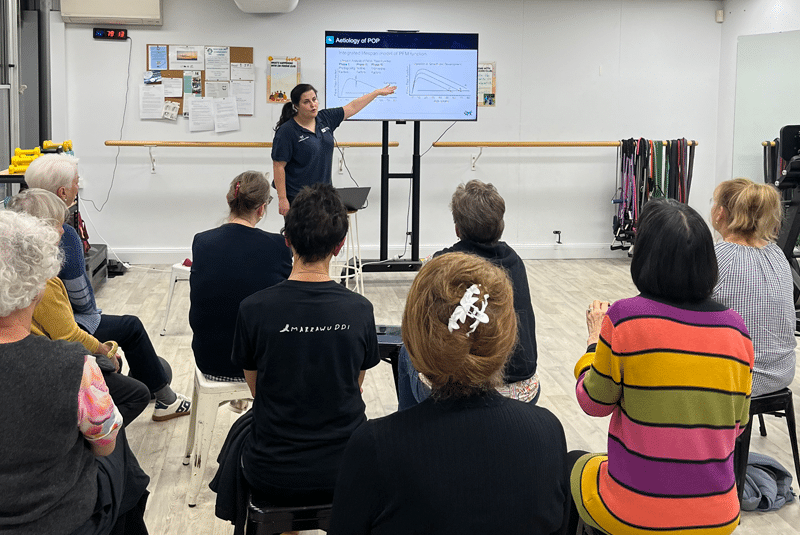
- 37% of women stop exercising because of prolapse symptoms2. This is concerning, because regular physical activity is crucial for preventing the onset of chronic diseases such as heart disease, diabetes and osteoporosis to name a few. Pelvic floor physiotherapists can review your prolapse, provide conservative therapies and support you in staying active. This could include instruction on safe ways to exercise, teaching you pressure‑management and helping you enjoy all the amazing benefits that regular physical activity and exercise offer. We can also support you post-operatively if you have had a prolapse repair to return to exercise. Check out our webpage for more information and to see all of the physiotherapy led exercise services at the clinic.

SPC Ninja Mums Soccer Team – Staying Active is Key
Myth 4: “Men don’t need to worry about their pelvic floor”
False.
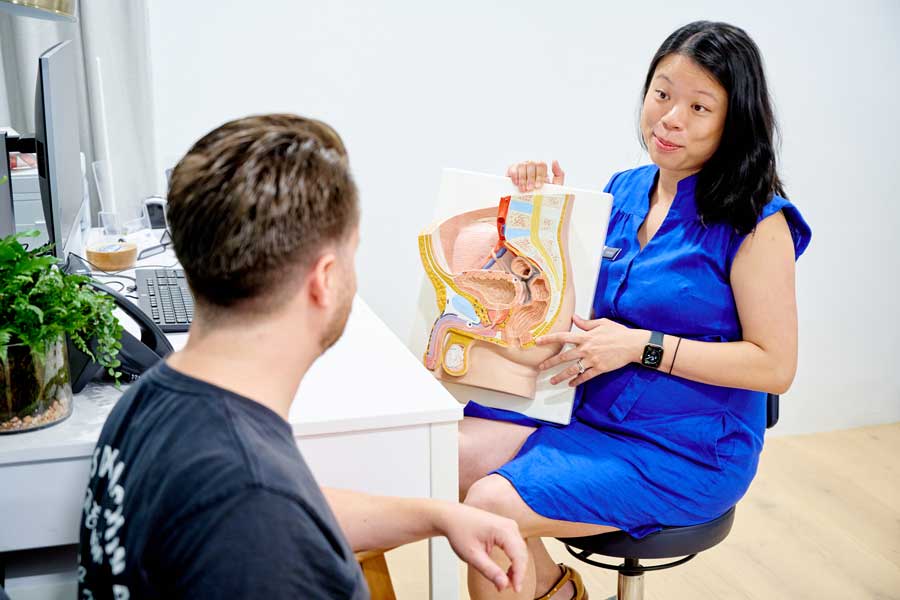
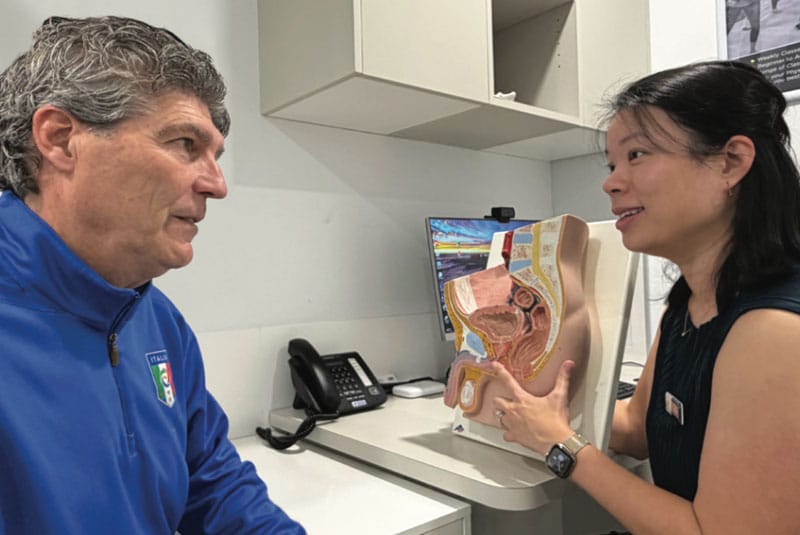
Men also have a group of muscles called the pelvic floor muscles. These muscles are very important in helping to maintain urinary and faecal continence and are also involved with male sexual function. Pelvic floor physiotherapy is recommended to help men who suffer from a range of different conditions including erectile dysfunction, premature ejaculation and pelvic pain.
Our website has some wonderful resources on it where you can find out more on how we can help you. Did you know that most men post-prostatectomy experience urinary leakage and there is good evidence to suggest that pelvic floor muscle training pre- and post-operatively can improve post-operative urinary continence, post micturition dribble and erectile function4,5? We offer pre-operative assessments to help optimise your pelvic floor prior to surgery and follow you up post-operatively to get you back to your goals as soon as possible. Book in early so you’re well-prepared and set up for the best results later.
Myth 5: “Physiotherapy can’t help with endometriosis; it’s a medical condition.”
Endometriosis is a medical condition, but the pain experience is influenced by much more than the lesions alone. Many women develop tight or protective pelvic floor muscles, abdominal tension, nerve sensitivity and altered movement patterns as their body adapts to ongoing pain. These secondary changes can continue to cause discomfort even after surgery or hormonal treatment. Physiotherapy plays an important role by helping to calm overactive muscles, improving mobility of the pelvis and surrounding tissues, supporting bladder and bowel function and teaching strategies to reduce flare-ups. When these contributors are addressed, women often notice significant improvements in daily comfort, menstrual pain, intimacy and overall quality of life.
If you’re unsure where to begin we have many resources which can help. Booking a Pelvic Health Assessment at Sydney Pelvic Clinic is a great first step toward feeling supported and in control.
Myth 6: “Painful sex is normal.”
While painful sex is common, it is not considered normal. Pain usually occurs when the pelvic floor muscles become tight or guarded, making penetration feel uncomfortable or sharp. This can happen after childbirth, with changes to hormonal status throughout the life stages, stress or previous experiences of pain. When discomfort persists, the body naturally becomes more protective which creates a cycle of tension and discomfort. Physiotherapy helps by assessing pelvic floor tone, releasing areas of tightness, supporting tissue mobility and guiding women through strategies that improve relaxation and comfort with intimacy. With the right support, sex can become enjoyable and pain-free again.
Sydney Pelvic Clinic’s integrated services including Pelvic Yoga and our Pelvic Floor Release Workshops, provide gentle, practical tools to deepen relaxation and can be wonderful additions to physiotherapy treatment.
Myth 7: “Constipation is a digestive issue, not a pelvic floor issue.”
Constipation is often linked to diet, but the pelvic floor also plays an important role in bowel emptying. If your pelvic floor muscles don’t relax or coordinate properly, it can feel difficult to empty your bowels even when digestion is normal. This can lead to straining, bloating and a sensation of incomplete emptying. Physiotherapy helps by teaching techniques that support pelvic floor relaxation, improving abdominal pelvic coordination, guiding helpful toileting positions and addressing any areas of tightness in the pelvis. These simple adjustments can make bowel movements much more comfortable and regular.
If you’re finding that constipation or bowel discomfort is affecting your daily life, a pelvic health assessment at Sydney Pelvic Clinic is a great place to start. Our team can help you understand what’s going on and guide you toward a personalised plan that actually makes a difference.
Myth 8: “Sucking in your tummy is good for training your core”
Do you find yourself sucking in your tummy throughout the day without even realising it? It’s more common than you think. While sucking in your stomach does activate the superficial abdominal muscles, it doesn’t necessarily engage the deep core muscles responsible for core stability.
What’s more concerning is the impact this habit may be having further down the chain. Constantly bracing in your abdominal wall can create tension in the pelvic floor. When the pelvic floor muscles become tight and struggle to relax, it can lead to pain, changes in bladder and bowel habits.
Take a moment throughout your day to check in with your posture. Are you sucking it in? Take a few deep belly breaths, and let your tummy soften. Your pelvic floor will thank you!

Check in with your posture through the day.
Conclusion
Pelvic health symptoms are common, but the myths surrounding them often stop people from seeking the support they deserve. Understanding your pelvic health is important and shouldn’t feel confusing or embarrassing. Let go of these outdated myths!
Your symptoms are real, valid and worthy of attention. Pelvic floor physiotherapists are trained to help you conquer your pelvic health and with Sydney Pelvic Clinic’s wide network of trusted multidisciplinary practitioners we can ensure your care will be optimised so that you get the outcomes you deserve this year.
At Sydney Pelvic Clinic, our goal is simple: to help you feel informed, supported and empowered, in 2026 and beyond.
FAQ
Do I need a referral to see a pelvic health physiotherapist?
No, you can book directly. Many women choose to see us alongside their GP, gynaecologist or specialist, but a referral is not required.
What should I expect in my first pelvic physio appointment?
A thorough history, education, comfortable examination options and a personalised plan designed around your goals.
Will pelvic physiotherapy help if I’ve had symptoms for years?
Absolutely. The pelvic floor responds extremely well to targeted retraining even if symptoms have been long-standing. Many women notice meaningful changes within a few weeks of consistent treatment.
References:
- Australasian Menopause Society. (n.d.). Australasian Menopause Society. https://www.menopause.org.au/
- Bø, K., Anglès-Acedo, S., Batra, A., Brækken, I. H., Chan, Y. L., Jorge, C. H., … Dumoulin, C. (2023). Are hypopressive and other exercise programs effective for the treatment of pelvic organ prolapse? International Urogynecology Journal, 34(1), 43–52. https://doi.org/10.1007/s00192-022-05407-y
- Continence Health Australia. (2025, July 30). Key statistics on incontinence. Continence Health Australia. https://www.continence.org.au/about-us/our-work/key-statistics-incontinence
- Goonewardene, S. S., Gillatt, D., & Persad, R. (2018). A systematic review of PFE pre-prostatectomy. Journal of Robotic Surgery, 12(3), 397–400. https://doi.org/10.1007/s11701-018-0803-8
- Hodges, P. W., Stafford, R. E., Hall, L., Neumann, P., Morrison, S., Frawley, H., Doorbar-Baptist, S., Nahon, I., Crow, J., Thompson, J., & Cameron, A. P. (2020). Reconsideration of pelvic floor muscle training to prevent and treat incontinence after radical prostatectomy. Urologic Oncology: Seminars and Original Investigations, 38(5), 354–371. https://doi.org/10.1016/j.urolonc.2019.12.007
- Jean Hailes for Women’s Health. (2023). Pelvic pain in Australian women: Report from the 2023 National Women’s Health Survey. Jean Hailes for Women’s Health. https://www.jeanhailes.org.au/uploads/15_Research/2023-National-Womens-Health-Survey-Pelvic-Pain-in-Australia-FINAL_TGD.pdf
- Woodley, S. J., Lawrenson, P., Boyle, R., Cody, J. D., Mørkved, S., Kernohan, A., & Hay-Smith, E. J. C. (2020). Pelvic floor muscle training for preventing and treating urinary and faecal incontinence in antenatal and postnatal women. Cochrane Database of Systematic Reviews, 5, CD007471. https://doi.org/10.1002/14651858.CD007471
- Sa, N. M. M., & Aziz, A. F. A. (2020). Lower urinary tract symptoms: Prevalence and factors associated with help-seeking in male primary care attendees. Korean Journal of Family Medicine, 41(4), 256–262. https://doi.org/10.4082/kjfm.19.0012