When we talk about mental health, the focus is often on what is happening in the mind. Yet our experience of stress, anxiety and wellbeing is also deeply embodied.
This article was written by a Sydney Pelvic Clinic physiotherapist. Date of publication: 17/9/26
Think about what happens when you are under pressure. Your shoulders may lift, your jaw tightens, your breath becomes faster or shallower, and you may brace through your abdomen or pelvic floor. You might feel restless and unable to settle — or tired, flat and disconnected.
These sensations are information.
Stress itself is not necessarily a bad thing. We need a certain amount of challenge to adapt, learn and build capacity. It is the type, intensity and load of stress, together with our capacity at that particular moment, that matters. Sometimes challenge helps us grow. At other times, cumulative stress can exceed our capacity and tip us towards discomfort, tension, fatigue or increased pain.
Rather than asking, “How do I fix everything?”, perhaps we can ask: “What is one small thing I can do today that helps me feel a little more supported?”
Your pelvis is part of the wellbeing conversation
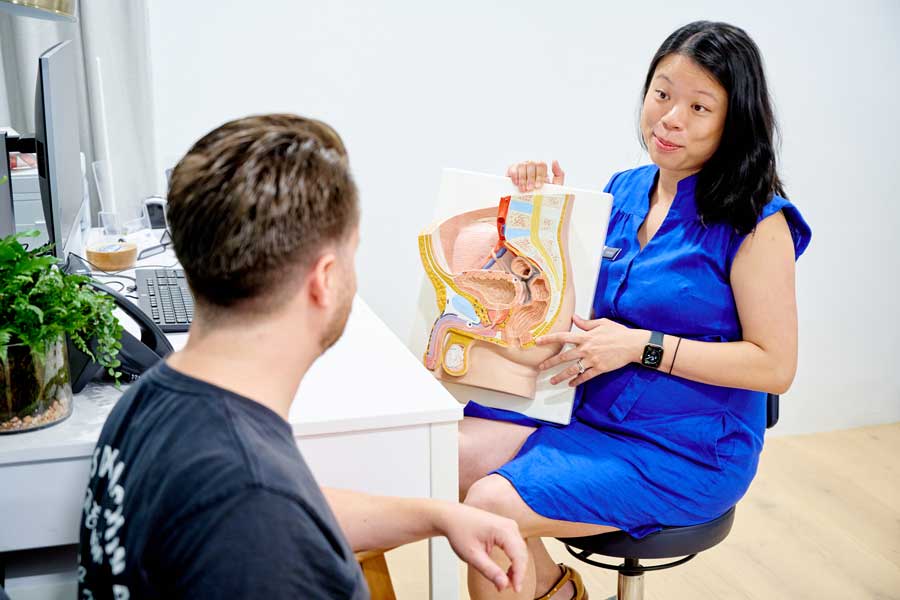
Pelvic dysfunction can include symptoms such as urinary incontinence, pelvic pain, urgency, prolapse symptoms, pain with sex, or difficulty relaxing or coordinating the pelvic floor.
These symptoms can affect much more than the pelvis. They may influence confidence, exercise, intimacy, sleep, social connection and emotional wellbeing.
Research is beginning to demonstrate the potential value of combining conventional pelvic healthcare with appropriate movement and mind-body practices.
In research involving women with urinary incontinence, a therapeutic yoga program developed with input from expert yoga consultants Leslie Howard and Judith Hanson Lasater showed encouraging results. Earlier work using a six-week version of the program reported an average 70% reduction in incontinence frequency. A subsequent three-month randomised trial found a 76% reduction in total incontinence frequency in the yoga group, although the control group undertaking stretching and strengthening also improved substantially.¹
This does not mean yoga is a cure for incontinence. Rather, the findings suggest that appropriately designed movement, body awareness, breathing and relaxation may be useful additions to pelvic healthcare.
Another six-week therapeutic yoga program involving women with chronic pelvic pain reported a 34% reduction in average pelvic pain, alongside improvements in daily activities, emotional wellbeing and sexual function.²
These were small studies, but they reinforce an important idea:
Pelvic health and emotional wellbeing do not exist in isolation.
 Notice how stress changes your breathing and posture
 Notice how stress changes your breathing and posture
Posture is not about sitting or standing perfectly. It is about having enough freedom and adaptability in the body to breathe and move without unnecessary holding.
The diaphragm and pelvic floor work together as part of our breathing and pressure-management system. As we inhale, the diaphragm descends and the pelvic floor responds; as we exhale, both recoil.
When we continually brace the abdomen, hold our breath or maintain rigid patterns of posture, this natural relationship can become less adaptable.
Our posture and breathing can also change with our emotional state. Notice your body when you feel safe and comfortable compared with when you are worried or under pressure. Stress may bring a more guarded posture, muscular tension and altered breathing.
Rather than thinking about posture or breathing as something we need to “correct”, we can begin to see them as information:
How am I breathing right now?
Where am I holding?
Do I need more movement, more support, more space or perhaps some rest?
Use your body to help you shift how you feel: yoga as a pathway
We often try to change how we feel by thinking our way out of it. Yoga offers another pathway.
It can be described as a bottom-up strategy: beginning with sensation and information coming from the body and using movement, breath, posture and awareness to influence our experience.
Yoga can be particularly useful because it brings many of these elements together. It doesn’t have to mean an intense class or complicated poses. Gentle movement, supported postures, breathing and relaxation can all provide opportunities to notice what is happening in your body and practise responding to it.
Research into yoga breathing, or pranayama, also suggests that conscious breathing practices can help bring attention into the present moment, reduce stress and support stress resilience.3
A small pilot study found a 27% increase in brain GABA levels in experienced yoga practitioners after a 60-minute yoga session, while no increase was seen in a comparison group who spent 60 minutes reading.4 GABA is an inhibitory neurotransmitter involved in regulating nervous-system activity. A later randomised study comparing yoga with walking also reported greater improvements in mood and anxiety and changes in GABA measures in the yoga group.5
Yoga is not a replacement for appropriate medical or mental-health treatment. Rather, movement, breath and body awareness can form part of a broader approach to wellbeing.
Find your own “landing pad”
When your nervous system feels overwhelmed, it can be difficult to know what to do.
This is where the idea of a landing pad can be helpful.
A landing pad is a simple practice that helps you return to your body and gives your nervous system an opportunity to settle.
It doesn’t need to be an hour-long yoga practice. Your landing pad might be a supported restorative posture, gentle rocking, a slow walk, feeling your feet against the ground, lying on the floor with your lower legs resting on a chair, or simply spending a few minutes noticing your breath.
The important part is discovering what feels supportive in your body.
Begin by noticing your early signals. Perhaps you start rushing, your thoughts race, your shoulders rise, or you grip your jaw, abdomen or pelvic floor. Or perhaps you withdraw, become very tired or feel disconnected.
Then ask:
“What might help me land?”
Slow your pace. Feel the support beneath your body. Allow your exhalation to become easy and unforced. Release unnecessary gripping through your jaw, abdomen and pelvic floor. Change position. Move gently. Look around the room and orient yourself to where you are.
A landing pad is not about forcing yourself to calm down. It is about creating the conditions that allow your system to shift.
Practise your strategies before you need them
 Practise your strategies before you need them
One of the most useful things we can do is practise these strategies when we are relatively well.
Experiment with different types of movement, breathing, supported postures and relaxation. Notice what helps you feel more settled, connected or comfortable.
The more regularly we practise, the more familiar these strategies become when life becomes challenging. We are not simply learning yoga poses — we are learning to recognise our own patterns and developing a toolkit of ways to respond.
Wellbeing is built through small steps
Wellbeing is rarely one destination that we finally reach. It is a relationship with ourselves that we continue to develop.
Learning to notice the body’s signals gives us an opportunity to respond earlier, rather than waiting until stress, tension or symptoms become overwhelming.
For one person, today’s step may be going for a walk. For another, it might be speaking to a psychologist, seeing a pelvic health physiotherapist, attending a yoga class, practising five minutes of breathing, finding a landing pad, getting more sleep or simply recognising:
“I am overwhelmed and I need some support.”
So where to now?
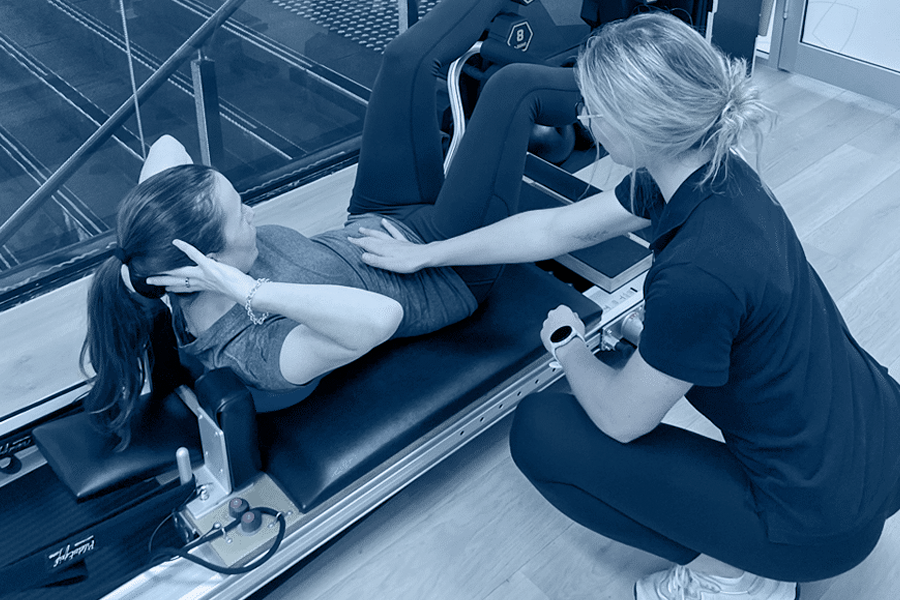
At Sydney Pelvic Clinic, yoga classes, personalised 1:1 Yoga Therapy and the Pelvic Floor & Whole Body Reset workshop provide opportunities to explore movement, posture, breathing, mindfulness and relaxation in a supportive environment.
The aim is not to give you another list of things you “should” be doing.
It is to help you develop practical tools that you can return to, so that movement, breath and awareness become part of how you support yourself in everyday life.
Wellbeing is not one giant leap. It is the small steps we practise, return to and gradually make our own.
Frequently Asked Questions
1. Can stress affect my pelvic floor?
Yes. The pelvic floor is part of the body’s muscular and nervous-system response to what is happening around us. Some people unconsciously increase muscular tension or bracing when stressed. Persistent tension may be relevant to symptoms such as pelvic pain or difficulty relaxing the pelvic floor. If you have ongoing symptoms, assessment by a pelvic health physiotherapist is recommended.
2. Can pelvic dysfunction affect my mental wellbeing?
It can. Pelvic pain, incontinence and other pelvic symptoms may affect confidence, sleep, intimacy, exercise and social participation. Research in women with chronic pelvic pain has also demonstrated an association between pelvic symptoms and emotional wellbeing.² Supporting pelvic health can therefore be one part of a broader wellbeing plan.
3. What should I do when I feel my nervous system becoming dysregulated?
Begin by noticing rather than immediately trying to change what you feel.
What is happening to your breathing? Where are you holding tension? Do you need movement or stillness?
Then find a simple landing pad: feel your feet on the floor, take a gentle walk, lie with your legs supported, soften unnecessary tension or spend a few minutes with comfortable, unforced breathing.
The goal is not to force relaxation, but to give your body cues of support and allow the nervous system an opportunity to regulate.
4. Is stress always bad for us?
No. Stress is part of being human and appropriate amounts of challenge can help us adapt and build capacity. What matters is the type and cumulative load of stress and whether we have sufficient resources and recovery. When demands repeatedly exceed our capacity, we may begin to experience increased tension, discomfort, fatigue, pain or emotional distress.
5. Does posture really affect breathing and pelvic health?
Posture influences the mechanical relationship between the rib cage, diaphragm, abdominal wall and pelvic floor. Rather than aiming for one “correct” posture, think about movement and adaptability. Regularly changing position and allowing the ribs and abdomen to move naturally with breathing can be more helpful than holding yourself rigidly upright.
6. Can yoga improve pelvic floor dysfunction?
There is promising research, but yoga should not be considered a replacement for individual assessment or treatment. Studies have reported improvements in urinary incontinence and chronic pelvic pain following specifically designed therapeutic yoga programs.¹ ² The type of yoga matters: people experiencing pelvic floor overactivity may require a different approach from someone working on weakness or coordination.
7. Is yoga good for mental health?
Research suggests yoga and breathing practices may support mood, anxiety and nervous-system regulation. Studies have reported changes in brain GABA following yoga practice, while research into yoga breathing has examined its role in stress resilience and conditions including anxiety and depression.⁴,5, ⁶
Yoga can form part of a broader wellbeing strategy, but persistent anxiety, depression or other mental-health concerns should always be discussed with an appropriate healthcare professional.
References
- Huang AJ, Chesney M, Lisha N, et al. A group-based yoga program for urinary incontinence in ambulatory women: feasibility, tolerability, and change in incontinence frequency over 3 months in a single-center randomized trial. American Journal of Obstetrics & Gynecology. 2019;220(1):87.e1–87.e13. doi:10.1016/j.ajog.2018.10.031.
- Huang AJ, Rowen TS, Abercrombie P, et al. Development and Feasibility of a Group-Based Therapeutic Yoga Program for Women with Chronic Pelvic Pain. Pain Medicine. 2017;18(10):1864–1872. doi:10.1093/pm/pnw306.
- Brown RP, Gerbarg PL. Yoga Breathing, Meditation, and Longevity. Annals of the New York Academy of Sciences. 2009;1172:54–62. doi:10.1111/j.1749-6632.2009.04394.x.
- Streeter CC, Jensen JE, Perlmutter RM, et al. Yoga Asana Sessions Increase Brain GABA Levels: A Pilot Study. Journal of Alternative and Complementary Medicine. 2007;13(4):419–426. doi:10.1089/acm.2007.6338.
- Streeter CC, Whitfield TH, Owen L, et al. Effects of Yoga Versus Walking on Mood, Anxiety, and Brain GABA Levels: A Randomized Controlled MRS Study. Journal of Alternative and Complementary Medicine. 2010;16(11):1145–1152. doi:10.1089/acm.2010.0007.
- van der Kolk BA. The Body Keeps the Score: Brain, Mind, and Body in the Healing of Trauma. New York: Viking; 2014.