relieve jaw tension

How Massage, Mindfulness & Relaxation Can Release Jaw Tension (TMJ)

Jaw clicking, locking or aching? These are common signs of a problem with your temporomandibular joint (TMJ), the joint that connects your jaw to your skull, just in front of each ear.

This is largely due to stress, which can have a huge impact on TMJ pain. The jaw is a common area for the body to hold stress, which is why having pain in this area as a result of stress is so common.

So, how do we address this pain? It may come as an additional surprise that massage, mindfulness, and relaxation can see some impressive results when it comes to addressing TMJ pain. Read on to learn more about the ways these practices can help you get back to living pain-free if you are dealing with TMJ pain.

What is TMJ?

First, let’s gain a firm understanding of conditions that cause jaw pain, to understand what’s happening in the body.

TMJ stands for “temporomandibular joint” which is a joint that connects the jaw bone to the skull. It acts similarly to a sliding hinge, moving alongside the jaw muscles when you open and close the mouth.

Those dealing with TMJ pain are experiencing pain in the jaw joint and/or overall jaw area. This pain can radiate to the cheeks and temples and can lead to additional TMJ symptoms like teeth clenching and jaw clenching, as well as headaches, overall pain with jaw movement (chewing, biting, talking, etc.), facial pain, odd sensations in the ear, and neck pain/neck stiffness.

What Causes TMJ?

TMJ pain can be caused by a number of different issues, including teeth clenching/grinding, trauma to the face, orthodontic/oral health issues, arthritis in the joint, dislocation of the jaw, and in many cases, stress.

Those with TMJ often develop this condition as a byproduct of stress, which can lead to excessive jaw clenching and jaw tension, both consciously and unconsciously. When left untreated, a small TMJ problem can worsen, going from jaw tension to severe pain.

5 Tips for Relieving TMJ Symptoms

If you’re looking for quick fixes to reduce jaw pain or facial muscle pain, you can try the following during TMJ treatment:

  1. TUTALC – Hold the tongue up, teeth apart, and lips closed, for the optimum relaxed jaw position
  2. Avoid clicking the jaw or pushing into the pain
  3. Do not rest your chin on your hand when at a desk/table
  4. Avoid clenching teeth together to reduce joint pain
  5. If your jaw is locked, try a liquid diet.

Easing Tension with Massage, Mindfulness, and Relaxation

When exploring treatment options for severe TMJ pain relief or tension, you may be tempted to hop right into different jaw exercises, surgery, or other medical procedures. However, we recommend easing into it with massage, mindfulness, and relaxation, as they have a number of benefits for TMJ.

The mind and body share an amazing connection. If stress in the mind can manifest in physical pain in the body, then it would make sense that practices that relax the mind could work to reduce the resulting pain! Practices that reduce stress on the muscles, whether physically through massage or mentally through mindfulness, can do wonders to ease TMJ pain. With time, they can do a lot to help you live pain-free.

How a Physiotherapist Can Help With Jaw Pain

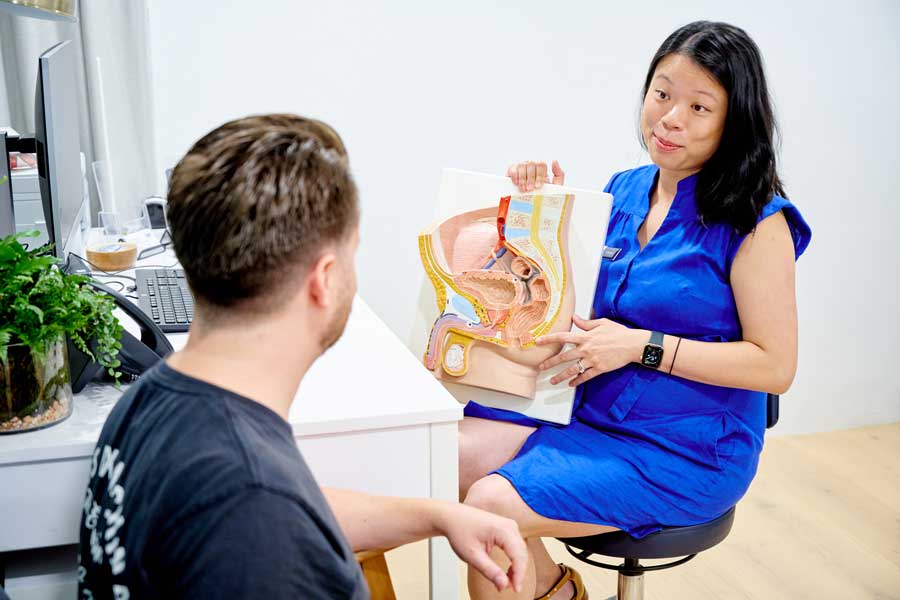
Massage, mindfulness and relaxation can all help ease jaw tension. If your jaw pain keeps coming back, or is getting in the way of eating, talking or sleeping, it’s worth having it properly assessed. A physiotherapist can work out what’s driving your pain and build a plan around it.

What Happens at a Physiotherapy Assessment

Your physiotherapist will usually:

  • ask about your pain and habits, such as when it started, what makes it worse, any injury, and habits like clenching, grinding or chewing gum
  • watch how your jaw moves, including how far and how smoothly you can open and close your mouth
  • check your neck and posture, as neck tension and posture can be linked to jaw pain
  • gently feel the jaw joint and muscles to find out which structures are sore or tight.

If you’ve had an injury to your jaw, your physiotherapist may recommend an X-ray to check for a fracture.

What Treatment May Involve

Treatment depends on what’s causing your pain, but at Sydney Pelvic Clinic it may include:

  • Education: understanding what may be causing your pain, and the habits that can help prevent it.
  • Jaw retraining exercises: specific exercises to help you open and close your mouth more comfortably.
  • Hands-on treatment: gentle releases for the jaw muscles and joint, both outside and, where appropriate, inside the mouth. This is where massage-style techniques fit into physiotherapy care.
  • A home program: self-release techniques for tight muscles around the jaw and neck, and mindful breathing to help release tension. Your physiotherapist will show you how.
  • Working with your dentist: if teeth grinding or clenching is involved, you’ll be encouraged to see your dentist to check its effect on your teeth.

When to Get Your Jaw Checked

Jaw pain often settles on its own. It’s a good idea to book an assessment if your pain hasn’t improved after a few weeks, your jaw is locking or you can’t open or close your mouth comfortably, or you’ve had a knock or injury to your jaw.

Getting Treatment with Sydney Pelvic Clinic

At Sydney Pelvic Clinic, our physiotherapists have long experience in assessing and managing jaw pain and temporomandibular joint dysfunction (TMD). If you’d like a plan to ease jaw tension, we can help you understand what’s going on and work through treatment together.

We also offer yoga-based classes where you can practise breathing and relaxation techniques, and massage with our qualified massage therapists.

Jaw pain getting in the way of eating, talking or sleeping? Book an initial assessment with one of our physiotherapists to find out what’s behind it, and get a plan to ease it. Book an appointment

Related Posts