Your Gut is Talking to Your Bones—Are You Listening?
When most people think about bone health, they picture calcium supplements, bone scans, and maybe the occasional walk but new research is flipping that script. It turns out, your gut—yes, your digestive system—may be just as important as your diet or exercise routine when it comes to keeping your bones strong.
Welcome to the concept of the gut-bone connection—a growing field of science revealing that your microbiome (the trillions of bacteria in your digestive tract) plays a powerful, direct role in bone building, bone loss, and overall skeletal resilience.
Gut Health: The Hidden Bone Builder
Emerging research is showing that gut microbes do more than digest food. They help regulate inflammation, nutrient absorption, hormone signalling, and even directly influence bone turnover.
A 2025 review introduced the concept of osteo-microbiology, a term used to describe how certain bacteria—and the short-chain fatty acids (SCFAs) they produce—stimulate bone-forming cells (osteoblasts) while inhibiting the activity of bone-resorbing cells (osteoclasts). It’s a delicate balance, and your gut might be the control centre.
One recent study found that adults with greater gut microbial diversity had higher bone mineral density (BMD) at the hip and spine. These individuals had more Firmicutes bacteria—associated with reduced inflammation and better calcium metabolism.

Exercise and the Gut-Bone Axis
We’ve known for years that resistance training and impact-based exercise can help build and maintain bone mass, particularly in the hips, spine, and femoral neck. What’s fascinating, though, is that exercise also enhances gut health.
Moderate to vigorous physical activity increases microbial diversity, promotes the growth of SCFA-producing bacteria, and strengthens the gut lining—all of which feed back into stronger bones. This makes resistance training a two-for-one: it strengthens bones directly and improves the gut environment that supports them.
A high-quality review from 2022 found that programs involving progressive resistance training (2–3x per week at moderate-to-heavy loads) were especially effective at improving BMD in postmenopausal women—while also reducing fall risk and improving balance.
Not All Gut Support is Equal
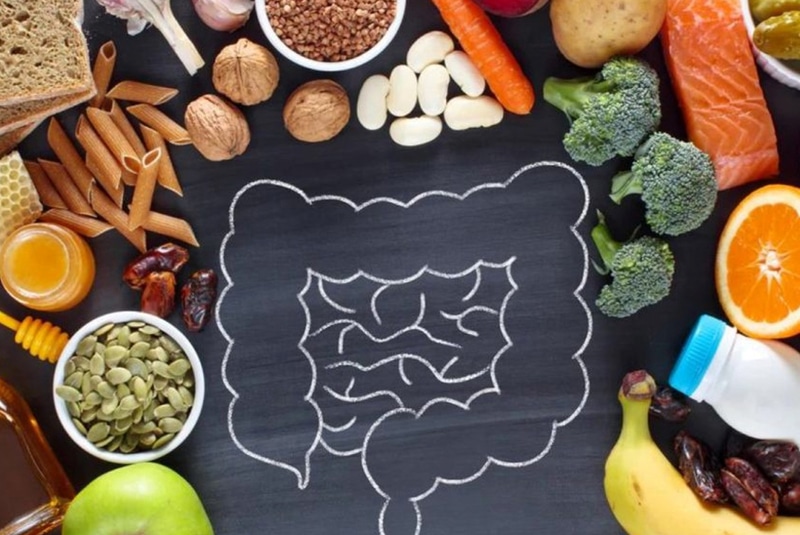
Just like not all exercise delivers the same results, not all gut-health strategies are created equal. To support your microbiome for bone health, aim for:
- High-fibre foods (e.g. legumes, oats, vegetables)
- Fermented foods (e.g. kefir, sauerkraut, kimchi, yoghurt)
- Prebiotics and probiotics, either from food or supplements
- Reducing ultra-processed foods and added sugars, which can disrupt microbial balance
What This Means for You
Bone health isn’t just about avoiding fractures later in life. It’s about feeling strong, stable, and confident now. The latest research encourages us to think bigger than just taking calcium supplements- your bones are listening to your gut, and both respond to what you eat, how you move, and the way you live.
Exercise and diet are still critical for bone health. At Sydney Pelvic Clinic, we’ve designed a Bone Builders Class specifically for people looking to strengthen their bones safely and effectively. Whether you’ve been diagnosed with osteopaenia, osteoporosis, or just want to future-proof your health, this class is for you.
In summary:
- The gut-bone axis is real and clinically significant.
- Resistance training boosts bone density and improves gut health.
- A diverse, fibre-rich diet feeds the microbes that fuel your bones.
- Strength starts from the inside—literally.
For more information on Bone Health and how to maintain it, see: https://www.sydneypelvicclinic.com.au/bone-health-what-it-is-how-to-maintain-it/
For more information on how our expert physiotherapists can help support you, visit these pages:
- Maintaining healthy bones with physiotherapy
- Physio-led group rehab classes that are tailored to bone health
References
Chen, L., Sun, J., & Tang, Q. (2025). The role of gut microbiota in bone metabolism: Mechanisms and therapeutic implications. Frontiers in Endocrinology, 16, 112345. https://doi.org/10.3389/fendo.2025.112345
Kumar, S., & Singh, A. (2023). Osteo-microbiology: Gut microbiome and bone health. Journal of Bone and Mineral Research, 38(4), 682–695. https://doi.org/10.1002/jbmr.4627
Martinez, I., & Johnson, C. (2024). Exercise-induced modulation of gut microbiota and its effects on bone health. Exercise Immunology Review, 30, 14–28.
Nguyen, T. V., & Jones, G. (2022). Progressive resistance training and bone mineral density in postmenopausal women: A systematic review and meta-analysis. Osteoporosis International, 33(7), 1315–1330. https://doi.org/10.1007/s00198-022-06312-4
Smith, M. E., & Lee, J. H. (2023). Dietary fibers, gut microbiota, and bone health: Emerging evidence and clinical applications. Nutrients, 15(2), 392. https://doi.org/10.3390/nu15020392
Zhao, L., & Wang, Y. (2025). The gut-bone axis: Emerging insights into the regulation of bone metabolism by the microbiome. Bone Research, 13, 45. https://doi.org/10.1038/s41413-025-00110-6