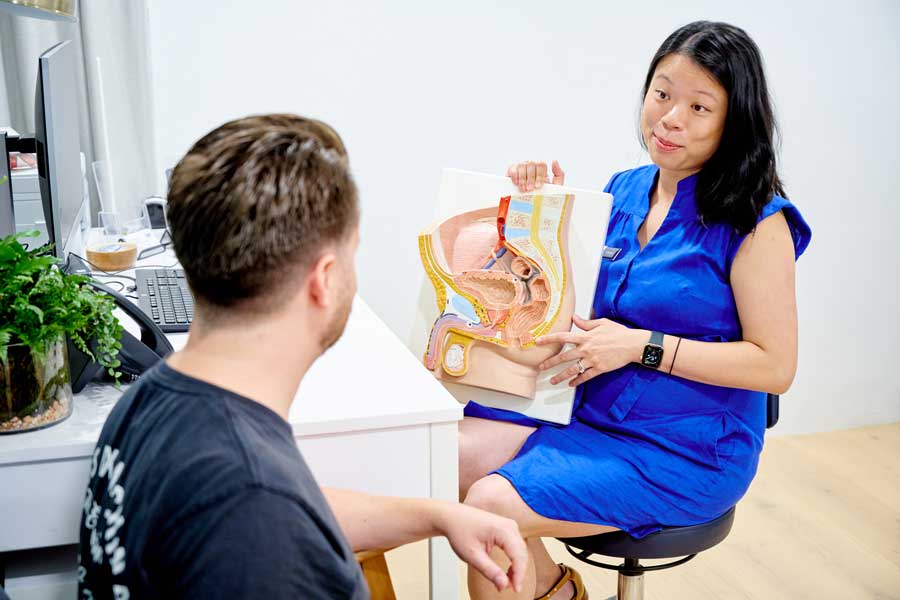
This article delves into what TTNS is and how it can help you regain control of your bladder.
This article was written by a Sydney Pelvic Clinic physiotherapist. Date of publication: 26/10/26<
What is overactive bladder?
An overactive bladder (OAB) involves a sudden strong urge to urinate, and is usually accompanied by frequent trips to the bathroom during the day and also at night. Some people may also experience urge urinary incontinence, where they leak urine with the urgency, or on the way to the toilet. Often people may have certain triggers that set off the urgency such as the sound of running water, seeing a bathroom, or even arriving home and turning your key in the door.
OAB can have a significant impact on everyday life. The sudden need to urinate, frequent trips to the bathroom, waking during the night, and sometimes urine leakage can make you feel as though you are constantly planning your day around your bladder.
 What are normal bladder habits?
 What are normal bladder habits?
The normal number of times to urinate is 4-8 times a day, and 0-1 time per night. During your awake hours the normal time between urinations is 2-4 hours. The volume of urine each time should be between 250-400ml but it can be double this first thing in the morning.
‘Normal sensation’ varies from person to person but is best described as a feeling of fullness that is in proportion to the amount your bladder is holding and there’s no urgency or panic about the potential of urinary leakage.
Can overactive bladder be treated?
Absolutely. The good news is that OAB can often be managed successfully with a combination of lifestyle changes, bladder training, pelvic floor muscle training, and nerve stimulation. Medication may also be considered in some cases, however some people wish to avoid taking medication or may experience side effects with it. Transcutaneous tibial nerve stimulation (TTNS) is a non-invasive treatment that may help reduce OAB symptoms.
What is TTNS?
TTNS stands for transcutaneous tibial nerve stimulation.
It involves delivering a mild electrical current to the posterior tibial nerve, which runs down the lower leg and passes near the ankle. The posterior tibial nerve has the same nerve root supply as the bladder’s nerve (S2-4). By stimulating the nerve supply to the bladder, this can distract the brain and help neuromodulate or ‘dampen down’ the signals being sent between the bladder and brain, thereby reducing the bladder’s overactivity.
The International Continence Society¹ recommends TTNS as part of first line management for OAB. TTNS is safe, non-invasive, painless, and you can use your machine from the comfort of your own home.
What happens during treatment?
Here at Sydney Pelvic Clinic, our pelvic physiotherapists can set you up with TTNS. The machines are readily available to purchase or hire in clinic, and your physio will set up the appropriate parameters and teach you how to use the machine. The surface electrodes are placed on the skin, over the course of the posterior tibial nerve at the ankle. You would then use this at home for 30 minutes, aiming for most days of the week. The research suggests completing sessions for at least a 12-week period, which can then be continued beyond this for maintenance.
The electrical stimulation feels like a tingling sensation around the ankle where the electrodes are placed and does not cause any pain. There are no serious adverse events reported in the research.
Can I use TTNS instead of taking medication for my bladder?
OAB can successfully be managed conservatively, and TTNS often forms part of a broader management plan. This may also include:
- Bladder training
- Pelvic floor muscle training
- Urge control strategies
- Identifying bladder irritants and managing fluid intake
- Addressing constipation if relevant
- Lifestyle changes
Adhering to a comprehensive management plan that comprises the above strategies alongside TTNS, can successfully treat OAB without the need for medication.
If you have already been prescribed medication for your bladder, you can still engage in conservative treatment and may even use it as an opportunity to wean off the medication.
Alternatively, if you have tried medication but experienced unwanted side effects, you can rest assured that there are plenty of other treatment options that can help.
Who cannot use TTNS?
TTNS may not be suitable if you have any of the following contraindications:
- Metal around the area of electrode placement
- Currently pregnant
- Have a pacemaker
- Have any infection
- Tissue damage at the electrode site
- Recent surgery
If you’re not sure where to start, come and see us at SPC. We work with a highly experienced team of pelvic physiotherapists and our network extends to a solid multidisciplinary team; we can help guide recommendations so you find the right people to help you. A collaborative approach helps with symptom management, allows you to regain control and stop letting your bladder ruin your day.
References
Abrams, P., Cardozo, L., Dmochowski, R., & Wein, A. (2018). Seventh International Consultation on Incontinence-Research society 2017. Neurourology and urodynamics, 37(S4), S6. https://doi.org/10.1002/nau.23783