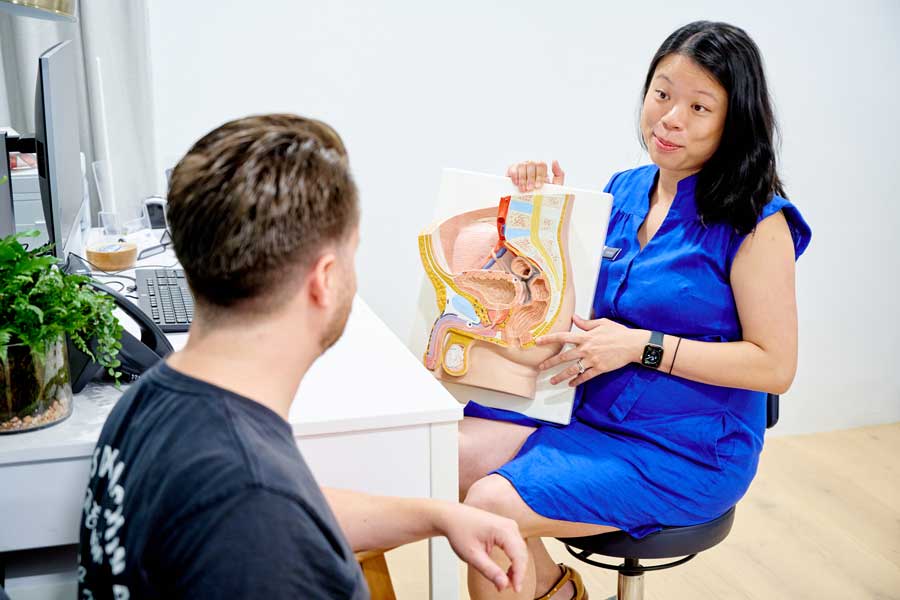
Pelvic physio explains the surprising link between hip strength and bladder control — and how targeted exercises can support pelvic floor and bladder health.
The connection between hips and bladder
When people think of bladder function, the focus is naturally on the structures which sit inside the pelvis, such as the pelvic floor muscles. However, we now understand that the pelvic floor is not an isolated structure. Rather, it is intricately linked to muscles beyond the pelvis, such as the abdominal, glute, hip flexor and adductor muscles.
Anatomy of the bladder and pelvic floor
The pelvic floor has two main layers:
- A deep layer that is designed like a sling, connecting from the pubic bone (at the front of the pelvis) to the tailbone (at the back of the pelvis). This muscle layer sits under the base of the bladder, and helps to support it high in the pelvis.
- The superficial layer of the pelvic floor includes the urethral sphincter, a ring-like muscle that surrounds the urethra which controls the release of urine from the bladder
Injury or weakness of these muscle layers can lead to incontinence. Furthermore, tightness and sensitivity of these muscles can lead to other bladder symptoms, such as urgency, difficulty emptying, and bladder pain.
Hip & Pelvic Floor functional interplay
The pelvic floor muscles have a relatively small cross-sectional area compared to other skeletal muscles, meaning that their ability to produce force is limited. As explained by Dr Alison Grimaldi, when the pelvic floor muscles are exposed to higher loads – such as during coughing, lifting, jumping – the pelvic floor muscles will rely on surrounding structures, which include the muscles around the pelvis and hips.
Furthermore, research has shown that the abdominal muscles (diaphragm, transverse abdominis, obliques), the glutes, obturator internus, piriformis, adductors, and the pelvic floor all work synergistically to maintain postural control in sitting and standing. They also activate simultaneously when performing a cough and sneeze (Bordoni, et al., 2023).
We know that the pelvic floor also has fascial connections with the muscles that help with hip rotation, such as the glutes and obturator internus. These structures are activated by a pelvic floor muscle contraction and thus, any muscular tension within the pelvic floor can lead to dysfunction of these muscles and vice versa.
What does this mean for the bladder?
Individualised and progressive pelvic floor muscle training is well-established as first line treatment for all types of urinary incontinence, based on many rigorous studies (Cardozo, et al., 2023). There is growing interest amongst researchers around the role of hip strengthening to treat urinary dysfunction and optimise bladder health. In fact, a study has shown that women with urinary urgency or stress incontinence have weaker hip abductors and external rotators than women without incontinence (Foster, et al., 2021)
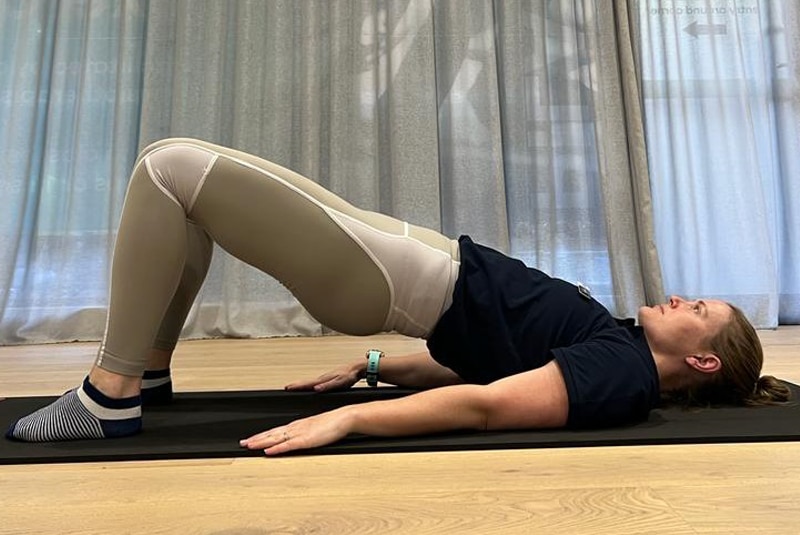
Hip Strengthening – Bridge Pose
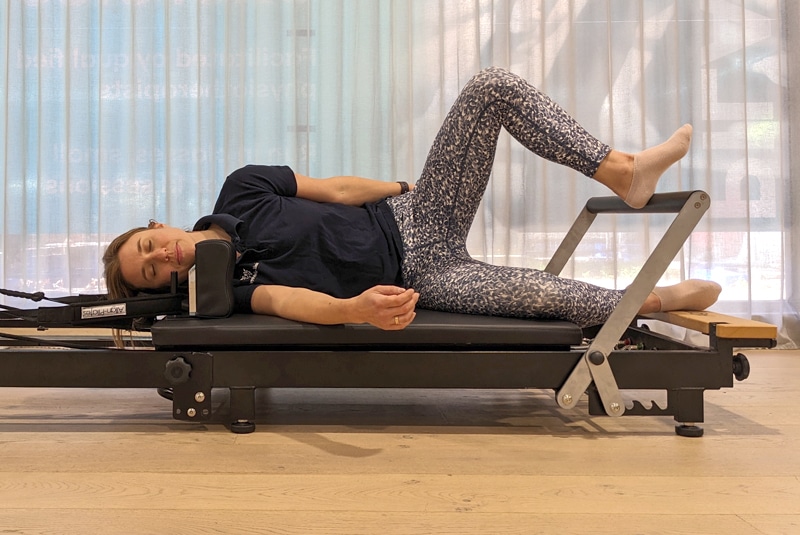
Hip Strengthening – Reformer – Side Lying Leg Press
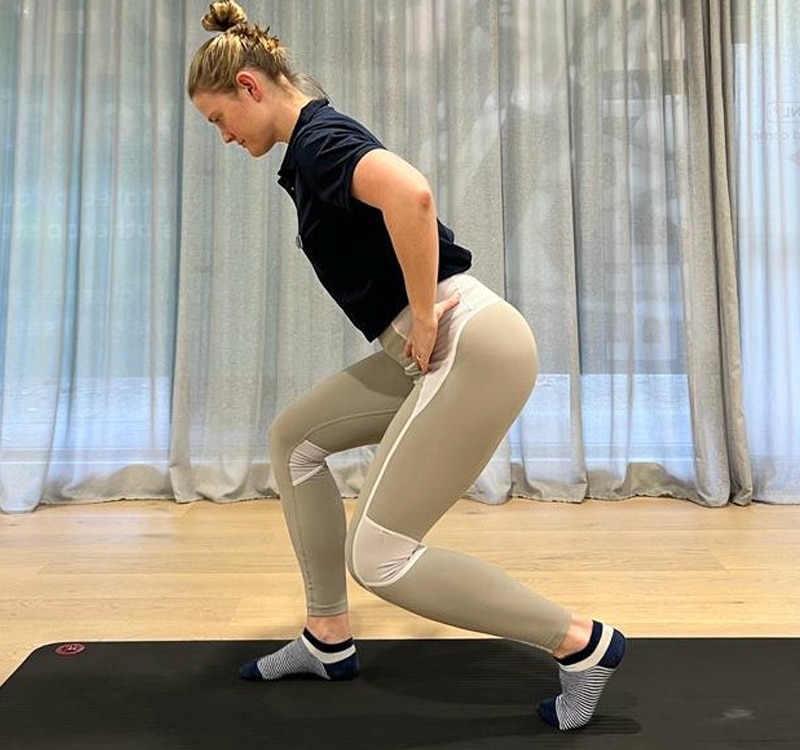
Hip Strengthening – Lunges
Treatment Implications
At present, the evidence is not clear on the role of hip strengthening as a primary strategy to improve bladder function. A pilot study by Jordre et al. (2014) found similar rates of improvement for women with stress urinary incontinence who underwent either a program of hip rotator strengthening or pelvic floor muscle training. However, another study by Tamaki et al. (2022) found no additional benefit of adding hip strengthening exercises to pelvic floor muscle training in urinary incontinence.
Anecdotally, we see many patients within the clinic who have experienced positive outcomes from adding hip strengthening into their treatment plan for bladder problems, alongside gold-standard pelvic floor muscle training. These exercises may be added into their home exercise program or our clinical rehab classes.
We theorise that hip strengthening exercises improve the functional capacity of the pelvic floor in two ways:
- By achieving a stronger pelvic floor muscle contraction, as these hip muscles are designed to work in synergy with the pelvic floor.
- By offloading the pelvic floor muscles. The muscles of the hip share the role of controlling posture and intra-abdominal forces with the pelvic floor. If hip muscles are stronger, the pelvic floor can work more effectively in its role to support the bladder and urethra.
Next steps
At SPC, we understand the importance of having systems to re-evaluate our treatment strategies, particularly when the evidence is emerging. For the reasons above, we often prescribe hip strengthening alongside pelvic floor muscle training in bladder conditions. To ensure we are achieving meaningful gains and health outcomes, we use tools such as the VALD DynaMo to accurately measure and monitor hip strength.
By using a dynamometry tool, such as the VALD DynaMo, we can help you build a progressive hip strengthening program to target your specific strength deficits. This can also have benefits for your functional mobility, injury prevention, and longevity.
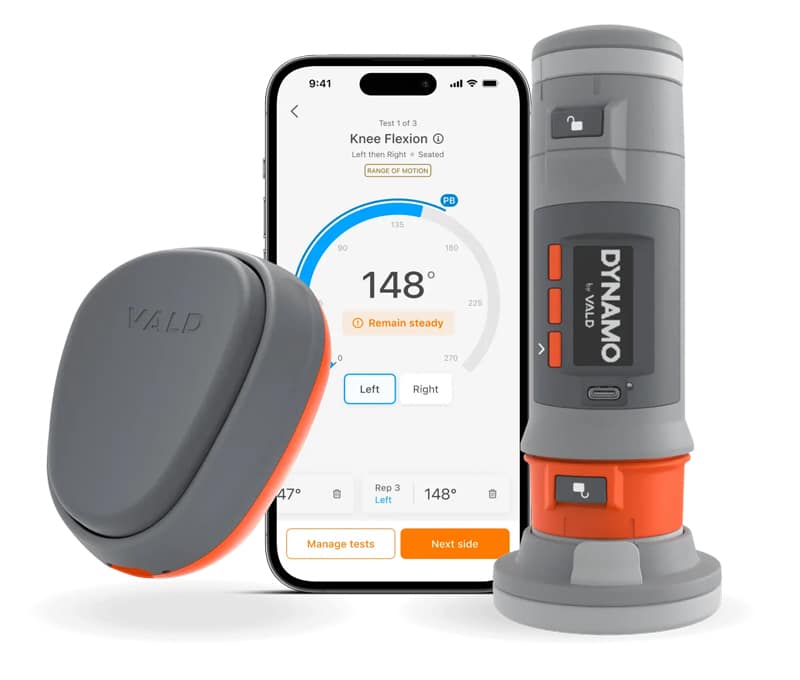
VALD DynaMo
References
Bordoni, B., Sugumar, K., & Leslie, S. W. (2023, July 17). Anatomy, abdomen and pelvis, pelvic floor. StatPearls – NCBI Bookshelf. https://www.ncbi.nlm.nih.gov/books/NBK482200/
Grimaldi, A. (2025, May 30). The hip and pelvic floor – Let’s get it together! | Find out more. Dr Alison Grimaldi. https://dralisongrimaldi.com/blog/the-hip-and-pelvic-floor/
Cardozo, L, Rovner, E, Wagg, A, Wein, A, Abrams, P. (Eds) Incontinence 7th Edition (2023). ICI-ICS. International Continence Society, Bristol UK, ISBN: 978-0-9569607-4-0. https://www.ics.org/ici
Foster, S. N., Spitznagle, T. M., Tuttle, L. J., Sutcliffe, S., Steger-May, K., Lowder, J. L., Meister, M. R., Ghetti, C., Wang, J., Mueller, M. J., & Harris-Hayes, M. (2021). Hip and Pelvic Floor Muscle Strength in Women with and without Urgency and Frequency Predominant Lower Urinary Tract Symptoms. Journal of women’s health physical therapy, 45(3), 126–134. https://doi.org/10.1097/jwh.0000000000000209
Jordre, Becca. (2014). Comparing Resisted Hip Rotation With Pelvic Floor Muscle Training in Women With Stress Urinary Incontinence: A Pilot Study. Journal of women’s health physical therapy. 38. 81-89. 10.1097/JWH.0000000000000008.
Tamaki, T., Oinuma, K., Shiratsuchi, H., Akita, K., & Iida, S. (2014). Hip dysfunction-related urinary incontinence: a prospective analysis of 189 female patients undergoing total hip arthroplasty. International journal of urology : official journal of the Japanese Urological Association, 21(7), 729–731. https://doi.org/10.1111/iju.12404