Learn what is normal bladder function, some simple bladder tips and tricks and how physiotherapy can help.
Your bladder is an organ that, when functioning happily, you won’t pay it much attention. It will fill up while you’re going about your day, you’ll notice when it’s full and you’ll go and empty. You won’t think about it while you exercise, laugh or sleep. Simple right?
The urinary system is controlled by perfectly timed reflex systems within the autonomic nervous system, cognitive planning within the pre-frontal cortex of the brain, and strength and control of the pelvic floor muscles. It is common for things to get in the way of these intricately timed systems, resulting in bladder dysfunction and all sorts of pesky problems. Common interruptions to a healthy, happy bladder include: urinary tract infections, catheters, childbirth, surgeries, medication and pelvic floor muscle problems.
Common Bladder Symptoms
The following bladder symptoms are common, but they are outside of normal. Unfortunately, it is common for people to live with these symptoms for quite a long time before seeking help.
- Urinary incontinence – leaking with coughing, sneezing, laughing or exercise. It can start in childhood, with hormonal changes or after life events like childbirth or surgery. It can range from a few small drops to needing to change underwear or outer wear.
- Urinary urgency- a sudden overwhelming urge to urinate that is difficult to suppress. You may also leak (either a lot or a little) while racing to reach the toilet.
- Leaks while changing position, during sexual intercourse or leaking but not being aware of how it occurred.
- Needing to urinate frequently during the day.
- Waking to wee several times a night (nocturia).
- Losing the urge to urinate.
- Not feeling empty after urinating and needing to go again.
- Urine stream that is slow, hard to get started, or stops and starts.
- Straining to empty your bladder.
- Urine splitting/spraying.

What is normal bladder behaviour?
These are a general guide only and will largely depend on your lifestyle, fluid intake, exercise habits and the climate you live in.
- Normal to urinate 4-8 x per day
- Approximately 250-400ml per empty
- Wake to urinate 0-1 x per night if < 70 years old, and waking 1-2x/night if >70 years.
- Being able to hold while you wait and find a toilet for 10-15 minutes with a strong urge
- Straight stream that doesn’t split off or stop and start
- Feeling satisfied that you’re empty with no more urge to go afterwards
Sounds good right?
How physiotherapy can help:
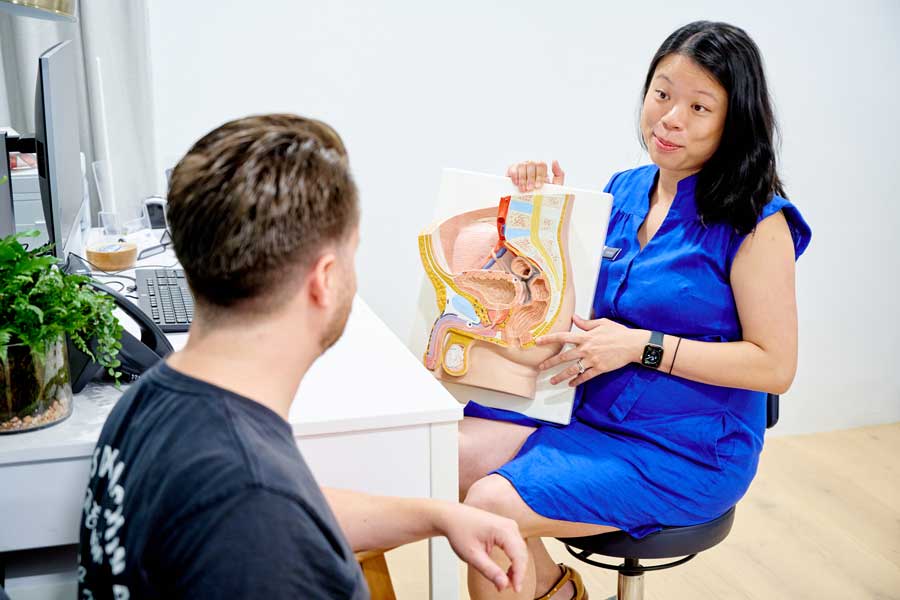
Pelvic health physiotherapists have been specially trained to assess and identify what is contributing to your bladder symptoms. We will also work with your medical team, to ensure you have had any necessary investigations if required.
Common bladder assessments pelvic floor physiotherapy may use:
- Bladder diaries: these give us a wealth of information about what exactly is going on with your bladder. We will ask you to complete a 3-day bladder diary, recording all fluids consumed and urine output.
- Post-void residuals: it is common for us to use an ultrasound to measure how much urine is in your bladder before you empty and then re-measure to see if there is any left. This is a non-invasive, painless, and simple test. We may ask you to come to an appointment with a comfortably full bladder if we need to complete this.
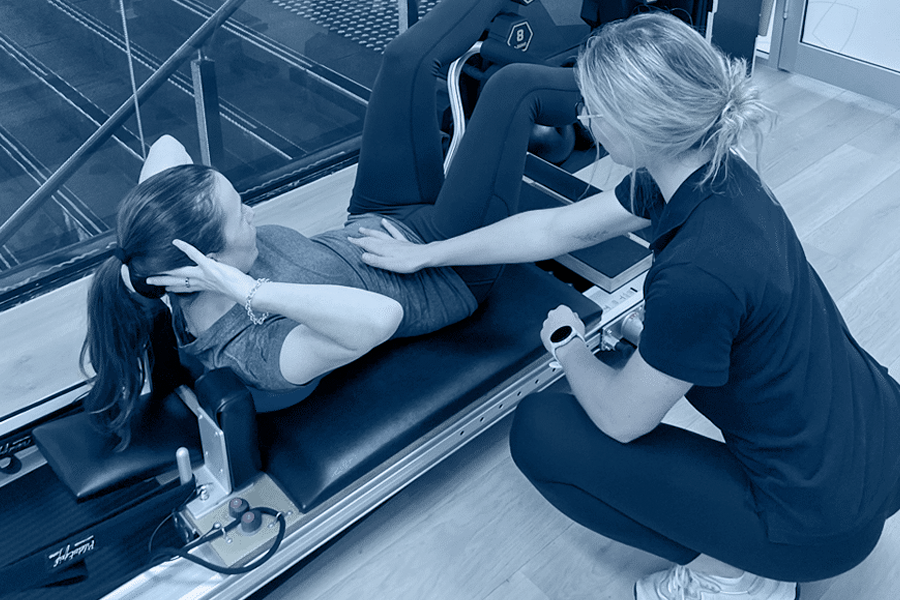
- Pelvic floor muscle assessment: The pelvic floor muscles need to have the ability to fully relax when you’re emptying on the toilet and contract when you’re not. We can give you a personalised, tailored pelvic floor muscle program, which may involve pelvic floor muscle relaxation, strengthening or coordination exercises.
Simple tips and tricks to improve your bladder health:
- Seek help early.
- There is some research that different drinks can irritate the bladder lining, causing urinary urgency. Liquids affect people’s bladders differently. Common bladder irritants include: alcohol, tea, coffee, orange juice and carbonated drinks. It can be a good idea to have a think about what drinks might be triggering your bladder.
- Avoid “just in case wees”. You may have gotten into the habit of emptying your bladder before going out, before a long drive or as soon as you get home. It is a good idea to avoid this habit and wait for your bladder to signal it’s full before emptying.
- Avoid fluid restriction as a strategy to reduce leaks or strong urges. This can lead to dehydration which can actually make urgency worse as the urine is more concentrated and irritating to the bladder.
- Teach your children to listen to their body and go when their bladder is full, not when it is convenient.
Pelvic floor physiotherapy appointments
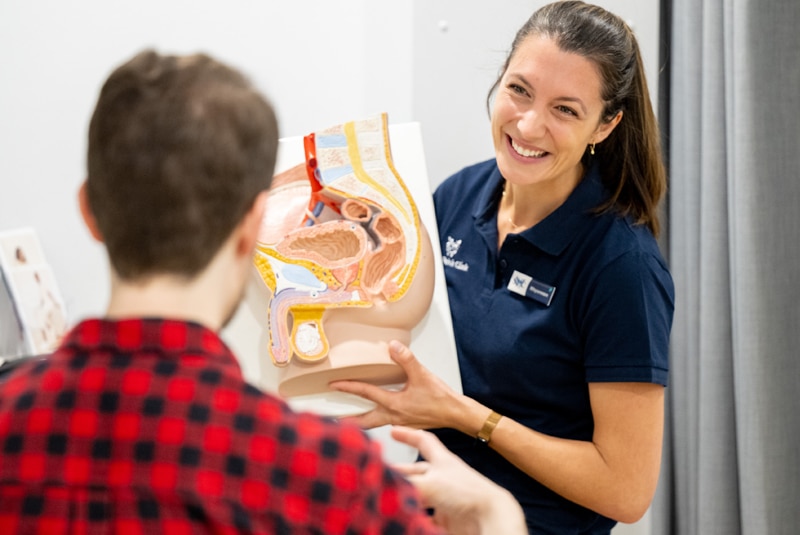
Our team of pelvic floor physiotherapists are highly skilled in assessing bladder dysfunction and helping you regain a happy and healthy bladder. We will complete a thorough, comprehensive assessment and make a tailored treatment plan to ensure we get you and your bladder to better health.
Common treatments for bladder dysfunction include:
- Pelvic floor muscle strengthening, relaxation or coordination exercises
- Bladder re-training and fluid advice
- Transcutaneous Electrical Nerve Stimulation (TENS) of the tibial nerve for bladder overactivity; or TENS for bladder pain
- Emsella pelvic floor strengthening chair (https://www.sydneypelvicclinic.com.au/physio/emsella-chair/)
- Addressing bowel dysfunction if relevant as this can adversely affect bladder function
- Internal manual therapy to the pelvic floor muscles if required
- Massage therapy- https://www.sydneypelvicclinic.com.au/how-massage-mindfulness-relaxation-can-release-pelvic-and-jaw-tension/
- Mindfulness
- Sleep hygiene to help nocturia
- Pelvic floor release workshop (https://www.sydneypelvicclinic.com.au/events/pelvic-floor-release-workshop/)
Come in and see one of our pelvic health physiotherapists at Sydney Pelvic Clinic to gain control over your bladder.