What Is Premature Ejaculation and What You Can Do About It

Premature ejaculation is nothing to be ashamed of. Read on to learn what causes it, how to fix it, and how to improve the quality of your sex life.

Popping the champagne bottle earlier than you intended is many men’s worst nightmare. It’s often the first thing people talk about when ranking sexual performance, and you may find yourself bracing for your partner’s reaction.

The thing is, finishing early is not the deal-breaker you believe it to be. The bigger problem is usually the shame and embarrassment you feel afterwards, rather than any disappointment your partner has in you.

So what is premature ejaculation, and is there anything you can do about it? Here’s everything you need to know.

What Is Premature Ejaculation?

Premature ejaculation, or PE for short, is when a man orgasms and ejaculates sooner than he or his partner would like during sex. Early ejaculation, premature climax, and rapid ejaculation are all terms used for the same condition.

PE on its own is not usually a cause for worry. Issues arise when it happens frequently. It can make sex less enjoyable for you and your partner, and over time it can put a strain on your relationship.

Premature ejaculation is one of the most common sexual dysfunctions in men, affecting approximately 31 percent of adult Australian males. Most men who experience it find it shameful or embarrassing, when in fact it shouldn’t be.

How ejaculation works

Premature ejaculation is often put down to psychological factors, but biology plays a role too. The central nervous system controls ejaculation. When a man is sexually stimulated, signals travel to the brain and spinal cord. Once excitement reaches a certain threshold, the brain signals the reproductive organs to eject semen through the penis.

Your Pelvic Floor and Premature Ejaculation

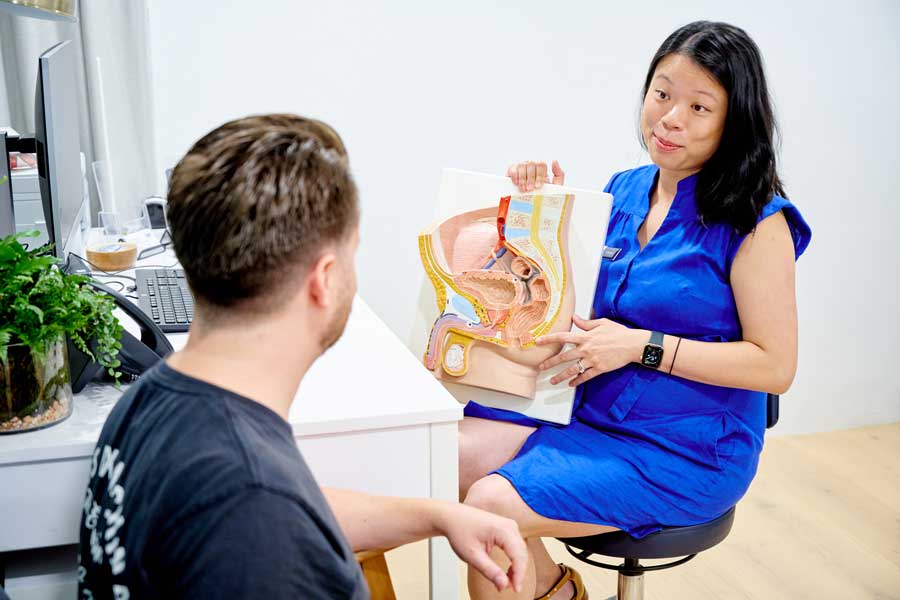
The pelvic floor muscles are located between your tailbone and your pubic bone, held within the pelvis. They support your bladder and bowels.

When these muscles become weakened, the organs they support are no longer fully supported, and a number of conditions can develop, including urinary and faecal incontinence, erectile dysfunction, and reduced sexual sensation or ability to orgasm.

Most of the exercises a physiotherapist teaches to help delay ejaculation target the pelvic floor muscles, which is why physiotherapy is one of the main treatment options for PE.

How Premature Ejaculation Affects Your Sex Life

When a man climaxes too early, it’s often a sign that sex feels good for him. Women, on the other hand, are capable of multiple orgasms, so arousal can build and settle several times in the same session. Men usually need recovery time after ejaculating, which can leave their partner feeling frustrated and unsatisfied.

PE can put a damper on your sex life, but not for the reason you might think. Most women in relationships with men who experience premature ejaculation report sexual dissatisfaction and low sex drive.

However, according to a 2014 study, the main reason isn’t the shorter duration of sex. Women pointed to their partners being too focused on delaying ejaculation and boosting their own performance, instead of paying attention to their partner’s needs.

In other words, your relationship may be struggling less because of PE itself and more because of how much you’re focused on it. The real problem is often the fixation on performance, not the condition.

What Causes Premature Ejaculation?

Many people assume a lack of self-confidence, frustration, and anxiety cause PE. Often, these are actually results of the condition. Over time, though, they can make PE worse, and you can get caught in a cycle of guilt, frustration, anxiety, and ejaculation issues.

Psychological causes

  • Depression: people with depression often experience low motivation, disturbed sleep, low mood, and reduced sex drive. Erectile dysfunction and premature ejaculation are two common sexual problems linked to depression.
  • Early conditioning: a man’s sexual behaviour is often shaped by his early sexual experiences, for example, ejaculating quickly to avoid getting caught having sex or masturbating.
  • Sexual inexperience: particularly common in younger men who place a high value on sexual performance, and see any “failure” as a blow to their masculinity.
  • Stress: work pressure, relationship issues, and financial worries can all affect sexual performance. A little stress can be helpful, but extreme stress over a long period has the opposite effect.
  • Strict upbringing: common where a man was raised to see sex as sinful or shameful.
  • Trauma: traumatic experiences, from being caught having sex or masturbating to being sexually abused as a child, can lead to sexual dysfunction such as PE.

How to Fix Premature Ejaculation

The main treatment options for PE are physiotherapy, psychological therapy, and medication. Depending on the root cause, your healthcare provider may use more than one.

Pelvic Floor Physiotherapy

Working with a pelvic health physiotherapist teaches you exercises to build tolerance and delay ejaculation. Most of these target the pelvic floor muscles, and may include pelvic floor strengthening, pelvic floor relaxation, and pelvic yoga.

Classic pelvic floor exercises (often called Kegels) work, but they take time. Making real strength changes usually needs a 12–16 week program. Many people also struggle to fit the exercises in, or don’t do them with the correct technique.

Emsella Chair

For people who find exercises hard to keep up, technology can help. The Emsella Chair is a non-invasive, painless treatment for men and women with weak pelvic floor muscles. It uses electromagnetic energy to trigger very strong (supramaximal) pelvic floor contractions, strengthening the muscles without any effort on your part.

Emsella isn’t a replacement for physiotherapy. In many cases, the best results come from combining it with a tailored exercise program as part of your overall treatment plan.

Psychological Therapy

Psychological therapy helps you work through the emotions and feelings that could be contributing to PE. It can also reduce anxiety about sexual performance.

Medication

Several numbing sprays and creams are available that may help desensitise the penis and slow ejaculation.

Book a consultation with a Physiotherapist today to explore all your options for fixing PE.

Related Posts